
2019
What I Want You to Know
My favorite blogger, Kristen Howerton, used to run a “What I Want you to Know” series on her blog, Rage Against the Minivan. Readers could submit stories sharing what they wanted others to understand about their unique life circumstances.
Here is my “What I Want you to Know.” Please note that the name, age, and other details about the child have been changed to protect his/her identity.
It must have been awful to experience the out-of-control tantrum of a child who by age and size was too old for such behavior. The screaming, thrashing, kicking, spitting, biting, throwing, and swearing were painful and scary to watch. It shattered the idyllic afternoon of swimming we were all enjoying with our children.
I know very little about the child I had in my care today. The coordinator at Family Services asked if I was available to do respite care for an 8-year-old girl with no known behaviors. My three bio kids all agreed they would like to have her spend the day with us, so I said yes.
I don’t know anything else about this girl, whom I’ll call Millie. I have no idea what circumstances brought her to foster care, where she used to live, if she has any siblings, or where she goes to school.
I can imagine a possible scenario based on the many foster kiddo stories I do know. More kids come into foster care at the beginning and end of the school year, so perhaps in the last few weeks of school, Millie put into words an event or picture of her home life that alarmed one of her teachers, who reported the concern. Or perhaps an injury occurred that resulted in Millie being taken to the hospital where questions were asked and a report was made. An investigation followed and it was determined that Millie was not safe at home.
Probably an emergency foster family was found for Millie – a family who was able to commit to her for a few days while the foster care coordinator put out pleas for a family to open their home to Millie more permanently.
A social worker probably picked Millie up after school and took her to this new, temporary home, somehow explaining to the 8-year-old that she could not return to her own home. Hopefully, the social worker would have had time to go to Millie’s home and make her best guess at what toys, stuffed animals, and clothes were Millie’s favorites so she could bring them (at least what she could fit in a bag or two) to Millie. Ideally, a long-term foster family would be found quickly. If not, Millie would have to transition through more temporary homes before moving into her permanent placement.
If even part of this imagined scenario captures Millie’s story, Millie is dealing with more stress and uncertainty than most adults can handle without losing their composure.
I was called on for respite care because Millie’s foster parents had to work. Likely they are scrambling for a summer childcare plan and need help while they get that challenging piece of foster parenting figured out. Millie would have to spend the day with yet another set of strangers she would likely never see again.
When Millie arrived at our house at 7:45am, she walked right in and explored all the rooms, finally settling down at the dollhouse where she began to play. My youngest daughter joined her. They got along well.
The morning went smoothly. Millie seemed to have fun with my kids – she did puzzles, explored our toys, and played on the swing set in the backyard. After lunch we packed up the car with towels, sunscreen, snacks, and kayaks and drove to the pond.
Millie walked right into the water, the same way she walked right into our house: determined to take it on and figure it out. She watched my two older daughters kayak over from the boat launch and asked for a turn. My three kids agreed to share one kayak amongst themselves so Millie could have her own kayak the entire time – after all, we can kayak whenever we want and Millie was our guest.
Millie loved the kayak. She paddled into the weeds and explored the little fish, plants, and bugs close to the shore. She paddled out into the deep water, stood up on the kayak and flung herself high in the air as she jumped into the water, delighting in the splash and cold water on the hot day. She paddled, rocked, tipped, and jumped off the kayak over and over again. She was having so much fun.
Two hours (and a couple snack breaks) later, it was time to go. Kids were getting tired and we needed to take Millie home to her foster parents. I gave the ten-minute warning, then the five-minute warning. Millie came out of the water. I explained we were going to pack up and walk back to the car. She did not want to leave. She threw the container of cherries into the water, stomped her feet, and started crying. Her emotions escalated quickly. She picked up a rock and tried to throw it at me. She started punching, scratching, and biting. Suddenly she was out of control and it was not safe. I held her hands so she could not hurt me and I avoided her kicks. I talked to her softly. I know you love kayaking, you were having fun, it is so hard to leave. Over and over, soft, gentle words. In between the “I hate yous” and thrashing around she sobbed, I want to keep kayaking. I just know I won’t ever get to kayak again.
It went on for more and more minutes. The people around me realized I wasn’t making any progress towards calming her and I did not have full control over the situation. I was not able to let go of her so I could pack up our belongings. Her rage was loud and scary. I was barely able to keep her and myself safe. I was aware of the disruption we were causing and unable to do anything differently.
My friend, who was at the pond with us, asked if I needed help. I did need help, but didn’t know what that help should look like. Strangers began to come over to ask how they could help. I was so grateful for these offers, but unable to direct them into anything useful. I was paralyzed holding onto this raging child.
What I couldn’t put into words in that moment was that Millie and I needed time and space to sit together through her entire tantrum. She needed to be able to scream and kick and punch with me sitting right there with her in the scary tangle of rage. She needed me to calmly and soothingly reassure her that I would stay and keep her safe. She needed to experience my relentless acceptance of and compassion for her emotions.
The action I needed from the adults offering help was reassurance that Millie and I could be there despite the disruption. I needed them to come over to me and say, You are fine, stay here with her. She needs to do this here, now, with you holding her. There is no rush. Stay. We’ll be here to help you when you are ready.
Instead, the offers of help felt like kind but firm nudges that I was to try to leave the area as quickly as possible. I worry this expectation sent Millie the message that she was doing something wrong - that she was misbehaving. But she was not misbehaving. This is what child trauma looks like.
I, unfortunately, reinforced that message by trying to end Millie’s tantrum and take her and her emotions away from the pond. My friend helped me as we struggled to carry her kicking and screaming to the path that led back to the car. She was scared; she didn’t know what we were going to do to her. She asked if we were going to kill her. At this point I started to cry as well, overwhelmed by how frightened and hurt this child was, overwhelmed that she was in my care and I was unable to meet her needs.
We made it a little ways down the path where we felt we had more space to let Millie rage. We set her down and sat with her. She eventually calmed down. I was able to make the decision that I needed either the social worker or foster mom to come to the pond to take Millie home. I did not feel safe driving her. A woman I didn’t know offered to drive to where there was cell reception to make that call for me. She returned 20 minutes later confirming the foster mom was on her way and would be there in about half an hour. I am so grateful for that woman’s help.
We spread out a beach towel in the shade on the side of that path for Millie to sit on, we sat on either side of her. We talked about seemingly mundane things. Her favorite class at school is art. She misses her dog she had to leave behind. She probably has to start a new school in the fall since her foster family lives in a different town. She collects Hatchimals. Another woman I didn’t know brought us cold drinks – sparkling flavored water and lemonade. My friend stayed with me the whole time.
Our bio kids played quietly and patiently, understanding without being told that Millie needed both adults’ full attention. Millie’s foster mom arrived and we made plans to meet the following week so Millie can kayak again, this time with the support of her foster parents.
Hours later, as I process the experience, I wish I could have a do-over. I wish I had had the confidence to let Millie rage right there by the pond with full respect for the emotions she was experiencing. I wish I could have verbalized that the help I needed was reassurance that I could just sit there with Millie for as long as she needed, rather than trying to remove her.
What I want you to know is that this is what foster care sometimes looks like, and we can support foster kiddos by sacrificing our idyllic afternoon and telling their caregivers, You are fine. Stay here with her for as long as she needs. We’ll be here to help you when you are ready.
NYC, M&Ms, a Kindness Cleat, and a Geminate
I remember fighting with my sister. I don’t remember what we fought about; it was probably inconsequential, like who got which placemat for dinner. But I’m pretty sure we drove my parents crazy. Now my kids fight, and it drives me crazy. In a typical day, this is what I hear hurled at me from various parts of the house:
Mom! She’s smirking at me!
Mom! She’s burping again!
Mom! She’s looking at me!
Mom! She smells and she’s sitting next to me and she said shut up!
Mom! She got more screen time than I did – IT’S NOT FAAAIIIIRRRRR!
Oh, the meanness… the unfairness… nothing I do seems to help.
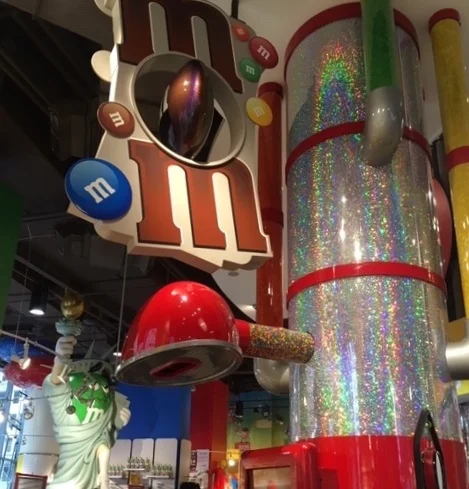
Last week, we met up with my long-lost friend Ciara and her family in NYC. We had one day together and we spent it well. As we walked through Times Square, our kids saw M&M’s World. They were so excited. “Mom,” they pleaded, “we have to go in! You love M&Ms!” It’s true, I do love M&Ms. We had to go in.
The kids spent what felt like an hour searching for the perfect treasure to buy. I said no to a dozen items covered in the M&M logo (coffee mugs, beach towels, plates, raincoats, slippers, candy dispensers, bathrobes…you name it) before they came across an M&M cleat – a clear, plastic cleat filled with M&Ms. I have no idea who thought of making a plastic shoe and filling it with candy; it is a perfect example of what I refer to as useless plastic crap. But it exists, and my kids saw it and wanted it.
Ciara generously offered to buy one for her kids and one for my kids – a souvenir to remember our whirlwind reunion in the city.
My soccer-fanatic kids were ecstatic. A cleat filled with candy! As Ciara offered each of my kids a few M&Ms from her family’s cleat, I had a flash back to the ancient babysitter my sister and I had when we were kids, Mrs. Binfield. She was a Norwegian woman in her 80s (90s?) who served dinner at 4:30pm, let us watch The Love Boat and TJ Hooker while she knit sweaters (always counting stitches in Norwegian), and unfailingly paused her knitting at some point during the evening to carefully dole out six M&Ms to each of us from a little container she kept in her knitting bag… if we behaved well.
The anticipation of those six M&Ms made up for the otherwise dull hours we endured with Mrs. Binfield until our TV shows began.
And here I found myself with a small container filled with M&Ms, it’s purpose obvious. A Kindness Cleat. I would dole out a few M&Ms each time I observed an act of kindness from one sister to another. I explained the concept to my kids when we got home from our trip and carefully placed the Kindness Cleat on a shelf in the kitchen. I was sure I had finally found a solution to the constant bickering and meanness. I would reward kindness until it became our new norm.
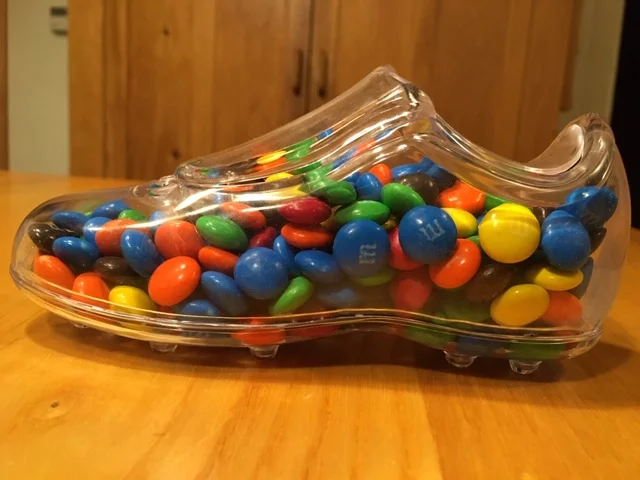
Unfortunately, it hasn’t been effective. It turns out an act of kindness towards a sister is not worth a few M&Ms. The cleat sits untouched on the shelf, still full of M&Ms.
I’ll give it another week… then I’m turning it into the Meanness Cleat, and will help myself to a few M&Ms every time my kids fight.
*Linguistic side note – I love the word meanness. It has a long consonant, called a geminate (from the Latin root Gemini, which means twinning). English doesn’t have consonant geminates the way some other languages do. For example, Italian has a short and long [l], as in pala (shovel) and palla (ball). In this case, consonant length is a distinctive feature that can distinguish meaning between two otherwise identical words. But in English, consonant geminates only occur across word or morpheme boundaries. In other words, it only occurs when the same sound occurs twice in a row as part of separate words or syllables, such as in ‘calm man’ or ‘misspell’, and even then, lengthening or not lengthening the consonant typically doesn’t change the meaning. Only in a few cases would gemination change the meaning… as in unaimed vs. unnamed. So yeah, ‘meanness’ is a cool word with a rare-to-English consonant feature. Lucky for me, pointing out my kids’ meanness gives me lots of opportunities to use a geminate.